
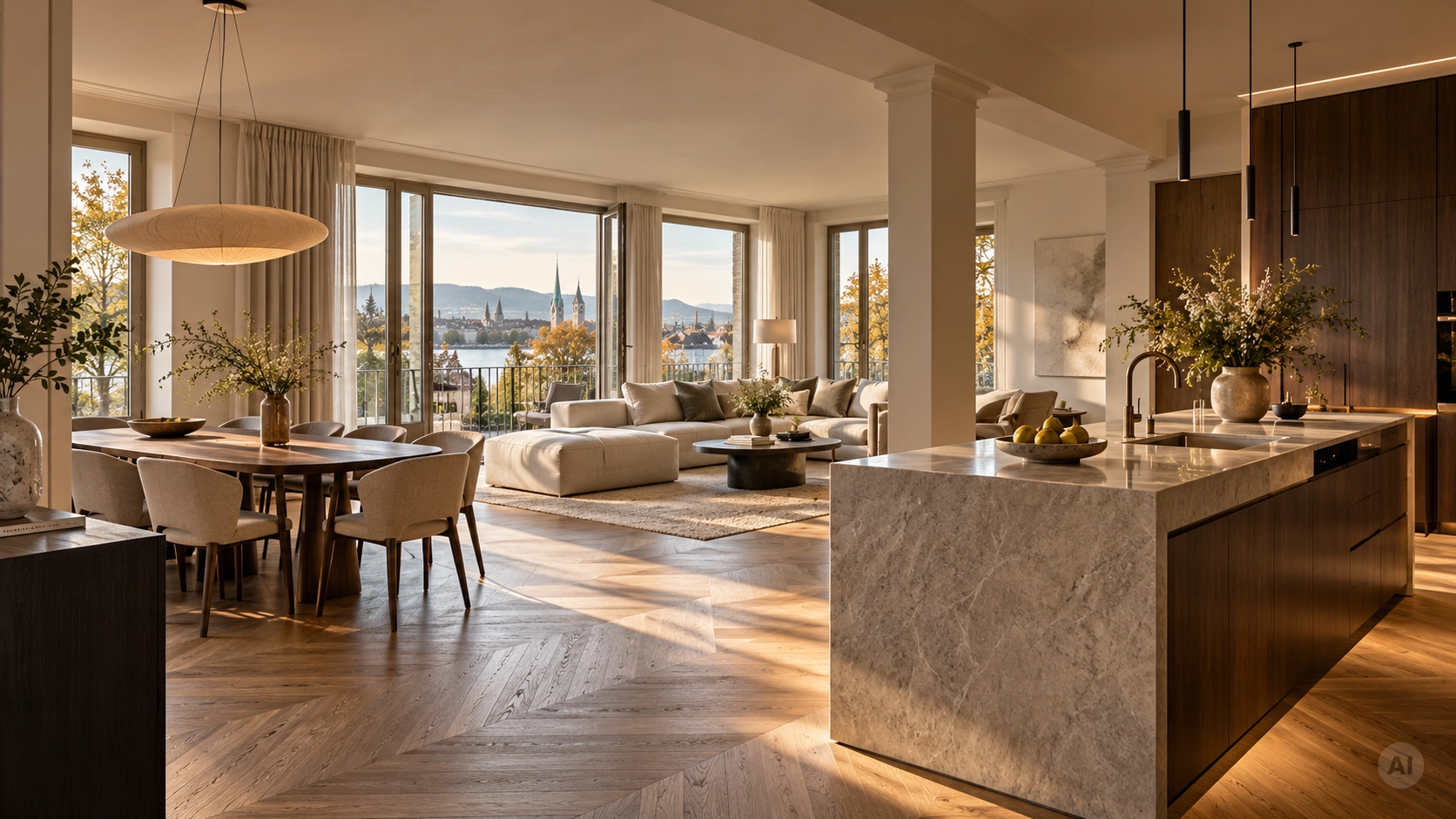
Investing in real estate requires careful decisions about where available capital will create the greatest impact. This is particularly important when renovating existing properties, upgrading premium residential interiors or repositioning assets within a competitive market. Not every expensive improvement automatically increases market value, and not every meaningful design enhancement requires a comprehensive renovation. At Anlela Design, we consider interior design an integral part of a broader property strategy: Which interventions improve spatial quality? Which elements shape perception? And where can a carefully allocated budget achieve the most convincing results?
Interior CapEx: Investing with Clear Priorities
CapEx, short for Capital Expenditures, refers to capital investments such as modernisation, refurbishment and improvements to buildings and their interiors. In real estate, this involves considerably more than selecting premium materials. An effective investment strategy distinguishes between essential maintenance, functional improvements and aesthetic enhancements. While these categories often overlap, they serve different purposes. Technical upgrades protect the long-term usability of a property. Improved spatial layouts enhance comfort and functionality. A carefully developed interior concept can further strengthen perceived quality and market positioning.
For property owners, investors and asset managers, the challenge lies in evaluating these measures as part of a coherent overall strategy. Expensive natural stone flooring will have limited impact if room proportions are unbalanced or inadequate lighting compromises the atmosphere. Establishing the right priorities is therefore just as important as determining the investment budget.
1. Floor Plans and Spatial Proportions: The Foundation of Property Enhancement
Some of the most effective improvements begin not with finishes but with spatial organisation. Inefficient circulation, poorly proportioned rooms, excessive corridor space and inadequate storage can significantly reduce a property’s appeal. Carefully reconsidering the layout can improve functionality and create a greater sense of openness without increasing the actual floor area.
This approach is particularly relevant for existing apartments in Zurich. Where can sightlines be improved? Could the kitchen, dining and living areas be more effectively connected? Which structural modifications are truly necessary, and which spatial improvements could be achieved through intelligent furniture placement, bespoke joinery or repositioned doors? At Anlela Design, we examine these questions at an early stage because a functional spatial concept provides the foundation for every subsequent investment.
2. Lighting Design: Creating Significant Visual Impact
Lighting is one of the most influential elements in spatial perception. It shapes proportions, highlights materials, supports orientation and defines the atmosphere of an interior. However, technically adequate lighting does not necessarily translate into a compelling architectural lighting concept.
A carefully balanced combination of ambient lighting, indirect illumination and architectural accents can substantially transform the perception of a room. Entrance areas, living spaces, kitchens and bathrooms can particularly benefit from this approach. The objective is not to install more light fixtures, but to position and coordinate them precisely according to the room’s function. Thoughtful lighting design can therefore represent a highly effective interior CapEx investment, provided installation costs and existing building conditions are considered.
3. Material Selection: Invest in Quality Where It Matters Most
Premium interior design does not mean specifying the most expensive material for every surface. What matters is establishing a clear material hierarchy. Flooring, kitchen cabinetry, worktops, doors and selected feature walls strongly influence the overall impression of an interior. When these elements are carefully coordinated, even a restrained material palette can create an exceptionally refined result.
At Anlela Design, we favour authentic, durable materials with timeless visual appeal. Wood, natural stone and high-quality textiles can introduce warmth, depth and individuality. We also assess whether existing materials can be preserved, restored or adapted. Particularly within Switzerland’s existing building stock, combining sensitive refurbishment with precise craftsmanship can offer an attractive alternative to complete replacement.
4. Kitchens and Bathrooms: Targeted Modernisation Instead of Maximum Expenditure
Kitchens and bathrooms play a decisive role in how a property is perceived. At the same time, they are among the more expensive areas to renovate because of technical installations, specialist requirements and material costs. A complete replacement is therefore not necessarily the most financially sensible approach.
In an existing kitchen, replacing cabinet fronts, worktops, lighting or selected appliances may be sufficient, provided that the underlying structure and technical installations remain suitable. Bathrooms may benefit from carefully chosen new surfaces, improved lighting and more coherent fittings. However, where waterproofing, plumbing or other technical components require renewal, these essential works must take priority. Aesthetic improvements should always build upon a reliable technical foundation.
5. Bespoke Joinery: Functional Quality as a Differentiating Feature
In premium apartments and urban residences, individually designed storage solutions can make a substantial difference. Built-in wardrobes, entrance cabinetry, libraries and integrated furniture use available space efficiently while reinforcing architectural clarity. Such solutions are particularly valuable in apartments with challenging layouts.
With a strong background in craftsmanship, Anlela Design approaches bespoke furniture as a functional and architectural solution rather than an end in itself. Custom-made elements are justified when they provide measurable practical or spatial benefits. For investors, this means allocating resources to bespoke joinery where it genuinely improves usability and reinforces the property’s intended positioning.
6. Entrance Areas and Shared Spaces: Quality Begins Before the Front Door
In apartment buildings, premium residential developments and rental properties, first impressions deserve particular attention. Entrance halls, staircases and communal areas communicate the quality of a building before visitors enter an individual apartment. Worn surfaces, inadequate lighting or inconsistent design can undermine the perception of otherwise well-appointed residences.
Targeted improvements such as a coherent colour and material concept, upgraded lighting or the careful restoration of existing architectural features can significantly enhance these environments. For property portfolio owners, the advantage is that improvements to shared spaces influence the perception of an entire building rather than a single residential unit.
Interior CapEx and Property Positioning in Zurich
The Zurich real estate market demands a carefully considered approach to capital investment. A compact city apartment, a luxury residence overlooking Lake Zurich and an institutionally owned rental building serve different target groups and require different interior standards. Material specifications and design investments should therefore reflect the individual property and its intended market segment.
For a centrally located apartment, intelligent storage, durable finishes and improved spatial organisation may be particularly valuable. In an exclusive villa, expansive sightlines, selected natural materials, bespoke furniture and a seamless connection between indoor and outdoor spaces may take priority. Across larger residential portfolios, standardised material concepts and repeatable, durable solutions can support more efficient implementation. Premium interior design does not require the same level of expenditure in every property; it requires a precise understanding of context, expectations and intended use.
How Should Interior CapEx Measures Be Evaluated?
Effective prioritisation begins with a detailed assessment of the existing property. At Anlela Design, we distinguish between essential technical work, functional shortcomings and opportunities for aesthetic improvement. Potential interventions can then be assessed according to cost, spatial impact, usability and long-term durability. Construction complexity, implementation risks and future maintenance requirements must also be considered.
Comparing several refurbishment scenarios provides a useful basis for decision-making. These may range from a restrained cosmetic refresh to targeted modernisation or a comprehensive redesign. Floor plan studies, material concepts and 3D visualisations make the differences easier to understand before implementation begins. This allows property owners and investors to determine which measures are necessary to achieve the desired positioning. Whether an investment produces an attractive financial return must be assessed separately through property-specific costs, potential rental income, market valuations and relevant economic conditions.
Why a Larger Budget Does Not Automatically Increase Property Value
A common planning mistake is assuming that higher expenditure inevitably translates into increased property value. Highly individual luxury specifications may involve substantial costs without generating an equivalent premium from future buyers or tenants. Likewise, essential technical maintenance does not necessarily create a corresponding increase in market value, even though it may be indispensable for preserving the property’s condition and usability.
From a design perspective, the priority should therefore be to improve the qualities that influence the space as a whole. Intelligent layouts, balanced proportions, effective lighting, coherent material choices and functional built-in elements work together to create a convincing interior. Additional decorative or luxurious features should be considered only once these fundamentals have been addressed. This disciplined approach supports more deliberate investment decisions and helps avoid expenditure with limited impact on the finished property.
Anlela Design: Interior Architecture for Strategic Investment Decisions
At Anlela Design in Zurich, we combine creative expertise with a thorough understanding of materials, construction and craftsmanship. We analyse existing spatial concepts, identify opportunities for targeted improvements and support the selection of materials, lighting, furniture and bespoke interior solutions. Our objective is to reveal the architectural potential of a property while directing design investments towards the areas where they create meaningful value.
Even when existing plans have already been developed, an independent design assessment can be beneficial. Through the Anlela Design DoubleCheck service, we review floor plans and interior concepts with particular attention to functionality, spatial perception and design coherence. This can reveal opportunities for improvement before significant purchasing decisions or construction work begins.
Conclusion: The Right Investment Is the One That Improves the Space
A successful interior CapEx strategy does not begin by asking which materials are the most exclusive. It begins by identifying what a property genuinely needs. Technical condition, functional performance and aesthetic quality must be considered together. When floor plans, lighting, materials and furnishings are carefully coordinated, the result is an interior whose quality can remain relevant beyond short-lived trends.
For property owners, investors and asset managers in Zurich and throughout Switzerland, Anlela Design develops refined interior concepts tailored to individual properties and their strategic objectives. Together, we identify the design interventions that best match the building, its target audience and the available investment budget. Ultimately, successful interior investment is defined not by how much is spent, but by the quality of the decisions behind it.