
The sale of a high-end property begins long before the first viewing takes place. Even before prospective buyers study a floor plan, compare technical details or discuss the price, a first impression is formed. Light, proportions, furnishings, materials and sightlines convey within moments whether a property feels desirable. Especially for high-quality apartments, houses and villas in the Zurich area, interior design is therefore increasingly becoming an important part of real estate marketing.
Properties Are Not Only Assessed – They Are Experienced
On paper, living space, number of rooms and features can be described precisely. The emotional impact of a space, however, can hardly be expressed in figures. Yet this is exactly what plays a decisive role in a purchasing decision. A spacious living room can appear small in photographs if the furnishings and proportions are not right. High-quality architecture can lose some of its impact if lighting is poorly positioned or different materials compete with one another. Conversely, a clear and deliberately staged interior can reveal existing qualities that prospective buyers might otherwise overlook.
During the sales phase, interior design therefore serves a different purpose than in a traditional redesign. The aim is not to further develop the personal taste of the current owner. Instead, the goal is to highlight the architectural strengths of the property and create an atmosphere in which potential buyers can imagine their own future life.
The Difference Between Decoration and Strategic Interior Staging
When preparing a property for sale, the first thought is often decoration: a few new cushions, fresh flowers, neutral accessories and a tidy room. Such measures can help, but for high-end properties they are often not enough. A convincing property presentation begins much earlier.
The key questions are: Are the proportions of the furniture appropriate for the room? Are important sightlines kept clear? Is the view immediately visible when entering a room? Does the lighting support the architecture? Do materials and colours work together in a calm and sophisticated way? Is it clear how individual areas can be used?
Especially in spacious apartments and villas, inappropriate furniture can make rooms appear smaller than they actually are. Too many small pieces create visual unrest, while oversized elements can visually block valuable space. Thoughtful staging therefore works deliberately with scale, emptiness and rhythm. Not every square metre needs to be filled. High-quality interiors need sufficient visual calm so that architecture and materials can make an impact.
The First Photos Determine Attention
Today, most properties are discovered digitally first. For many prospective buyers, the viewing therefore begins not at the front door, but on a screen. At that moment, a property is competing directly with numerous other listings.
Professional real estate photography is therefore important, but it can only show what is actually in front of the camera. Poor spatial impact can only be corrected to a limited extent through photography. For a strong presentation, rooms should therefore be carefully prepared before the photoshoot.
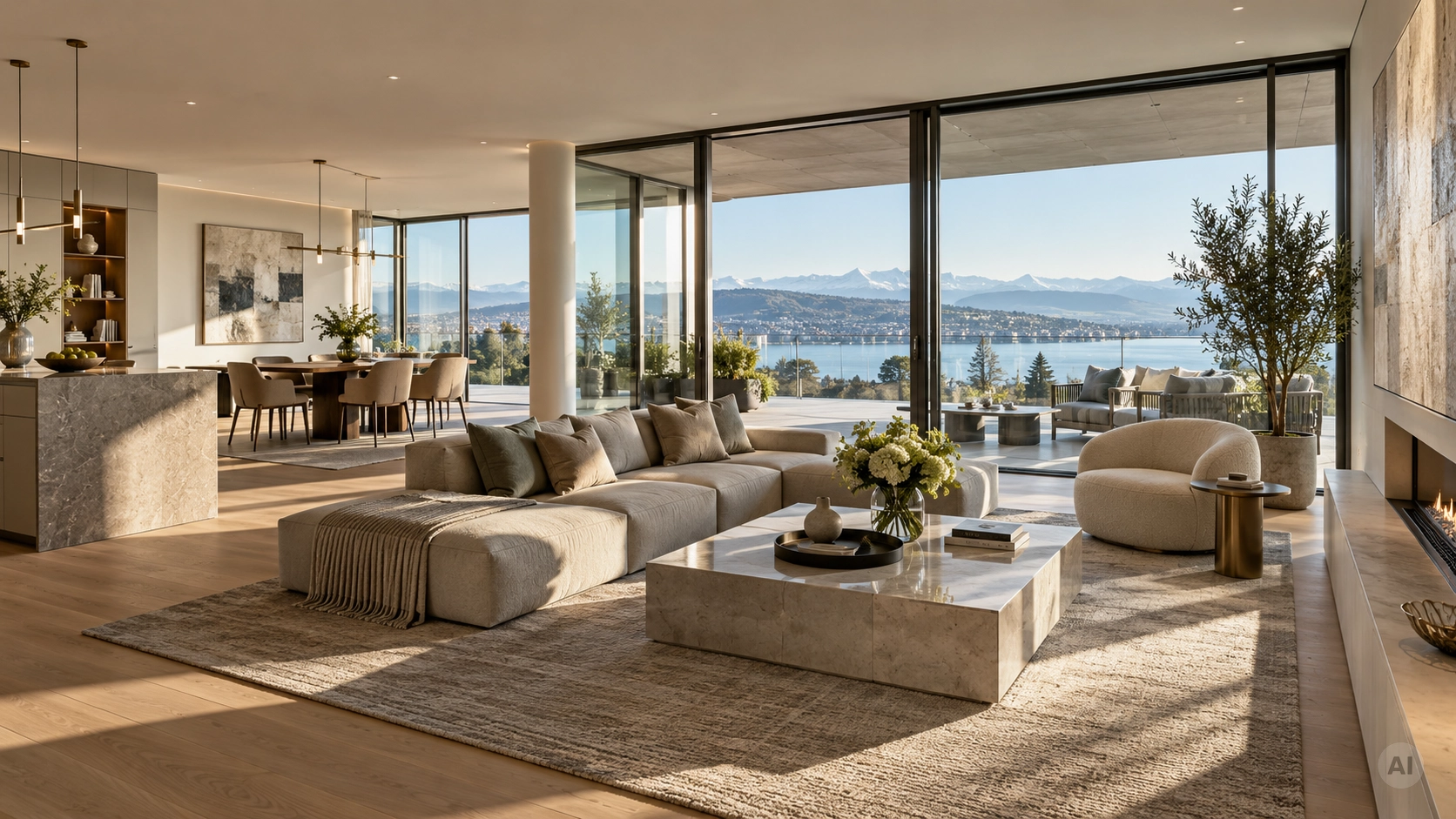
This involves more than simply keeping things tidy. Furniture, art, textiles, lighting and decoration must work together. At the same time, windows, views and architectural features should not be obscured. Especially for properties on Lake Zurich or in other privileged locations, the relationship between interior space, terrace, garden and landscape should be made clearly visible. A view is not merely a backdrop, but often one of the most important selling points of the entire property.
Presenting Indoor and Outdoor Areas as One Living Environment
The relationship between architecture and nature is one of the strongest emotional qualities a property can offer. Large windows, terraces, balconies and gardens can significantly extend a living space – provided this connection is also visually clear.
Materials, colours and furnishings can help connect interior and exterior areas visually. Natural stone, wood, mineral surfaces and calm colour tones, for example, can create a transition that makes architecture and landscape appear as one coherent whole. Furniture should be positioned in a way that supports views towards the outside rather than blocking them.
This aspect is particularly important in Switzerland. Lakes, mountains, forests and carefully designed gardens are often an essential part of a property’s quality. Good interior design therefore does not try to compete with the surroundings. Instead, it creates a calm framework in which landscape and architecture can work together.
Neutral Does Not Mean Characterless
When preparing properties for sale, it is often recommended to make interiors as neutral as possible. This advice is generally sensible, but it is frequently misunderstood. Neutrality does not mean removing all personality from a space.
Especially in the high-end market, a completely interchangeable interior can even be counterproductive. Discerning buyers expect quality, atmosphere and a recognisable design approach. The task is therefore to combine character with restraint.
A reduced colour palette, high-quality materials and a small number of carefully selected pieces of furniture and art can give a room identity without tying potential buyers to one particular style of living. Timeless design offers a decisive advantage in this respect: it conveys quality without being strongly associated with short-lived trends.
The Property’s Target Group Should Determine the Design
Not every property should be presented in the same way. An urban apartment in Zurich requires a different approach from a spacious villa on Lake Zurich or a holiday property in the Swiss Alps.
Before developing the presentation, it should therefore be clarified which buyer group is being addressed. Does the target group expect representative spaces? Are family-friendly layouts and storage important? Are home offices, art, design or generous outdoor areas key considerations? The more precisely these questions are answered, the more effectively the property can be presented.
This also creates an additional advantage for real estate agents and marketing teams: the visual communication of the property brochure can be consistently aligned with the same positioning. Interior design, photography, copywriting and marketing strategy then no longer tell several different stories, but instead communicate one coherent image.
Which Measures Can Be Useful Before a Sale
A convincing sales presentation does not automatically require a comprehensive renovation. Often, a few targeted changes can achieve a much stronger effect than costly alterations.
Possible measures include adjusting the furnishings, removing unnecessary items, revising the lighting concept, applying new wall colours, adding selected textiles or creating a clearer entrance area. Minor repairs and visible signs of wear should also not be underestimated before professional photography and property viewings.
For older properties, it can also be useful to assess whether certain surfaces, built-in elements or transitions between rooms are unnecessarily affecting the overall impression. However, not everything should automatically be replaced. High-quality existing materials, carefully crafted joinery or distinctive architectural features can contribute significantly to a property’s identity and should be deliberately preserved.
Why an Independent Analysis Before Marketing Makes Sense
Owners usually know their property over many years. As a result, certain spatial weaknesses or unsuitable solutions may no longer be consciously noticed. Real estate agents, understandably, focus primarily on market positioning, the sales process and communication.
An independent interior design assessment complements these perspectives. It examines the property in terms of spatial impact, proportions, materiality, light and use. This can lead to specific recommendations on which areas should be changed before marketing – and which can deliberately remain untouched.
Such an analysis can be particularly valuable before extensive renovations or purchases are decided upon. Not every investment automatically increases the attractiveness of a property. What matters is whether it supports the qualities that are genuinely relevant to the respective target group.
Interior Design Becomes Part of the Sales Strategy
In the high-end property segment, it is not enough simply to document a property correctly. It must be presented in a way that is clear, sophisticated and emotionally compelling. Interior design can help make existing qualities visible, explain spatial relationships and create an atmosphere that prospective buyers will remember.
For real estate agents, marketing teams and owners, this represents a shift in perspective: the design of a property is not only relevant to its future residents. It can already become a powerful communication tool during the sales process.
At Anlela Design, we therefore take a holistic view of properties. Architecture, interiors, materials, furnishings, lighting and surroundings should not exist separately alongside one another, but should together create a clear spatial identity. Especially for high-end properties in Zurich and throughout Switzerland, a carefully prepared presentation can make the decisive difference between a property that is simply listed and one that prospective buyers genuinely want to experience.