
A high-quality interior is not created by simply combining well-known brands. It is shaped by attitude, careful selection and a deep understanding of architecture, proportion and materials. At Anlela Design, we therefore do not view furniture as interchangeable equipment, but as defining elements of a space. A carefully selected armchair, a sculptural table or a bespoke built-in unit can influence the character of an interior just as strongly as light, ceiling height or sightlines. Collectible Design describes precisely this approach: furniture and objects are selected not only for their function, but also for their design quality, provenance and lasting significance.
What Does Collectible Design Mean?
Collectible Design exists at the intersection of furniture design, craftsmanship, art and architecture. It includes limited editions, individually commissioned pieces, historic designs and contemporary works by independent designers. Price alone is not the decisive factor. An object becomes collectible through an original concept, clearly attributable authorship, exceptional use of materials and limited availability.
Unlike short-lived interior trends, such a piece of furniture has a recognisable identity. It tells the story of its designer, its production and the period in which it was created. Good pieces do not lose their impact after a single season. They develop a patina, accompany their owners for many years and can later find a new life within a different spatial context.
When Furniture Becomes Part of the Architecture
In our work, the selection of furniture always begins with the space. How does daylight enter the room? What sightlines exist between the living area, terrace and surrounding landscape? Which proportions are defined by the architecture? Which surfaces and colours are already present? Only once these questions have been answered can we determine which object will genuinely complement the room.
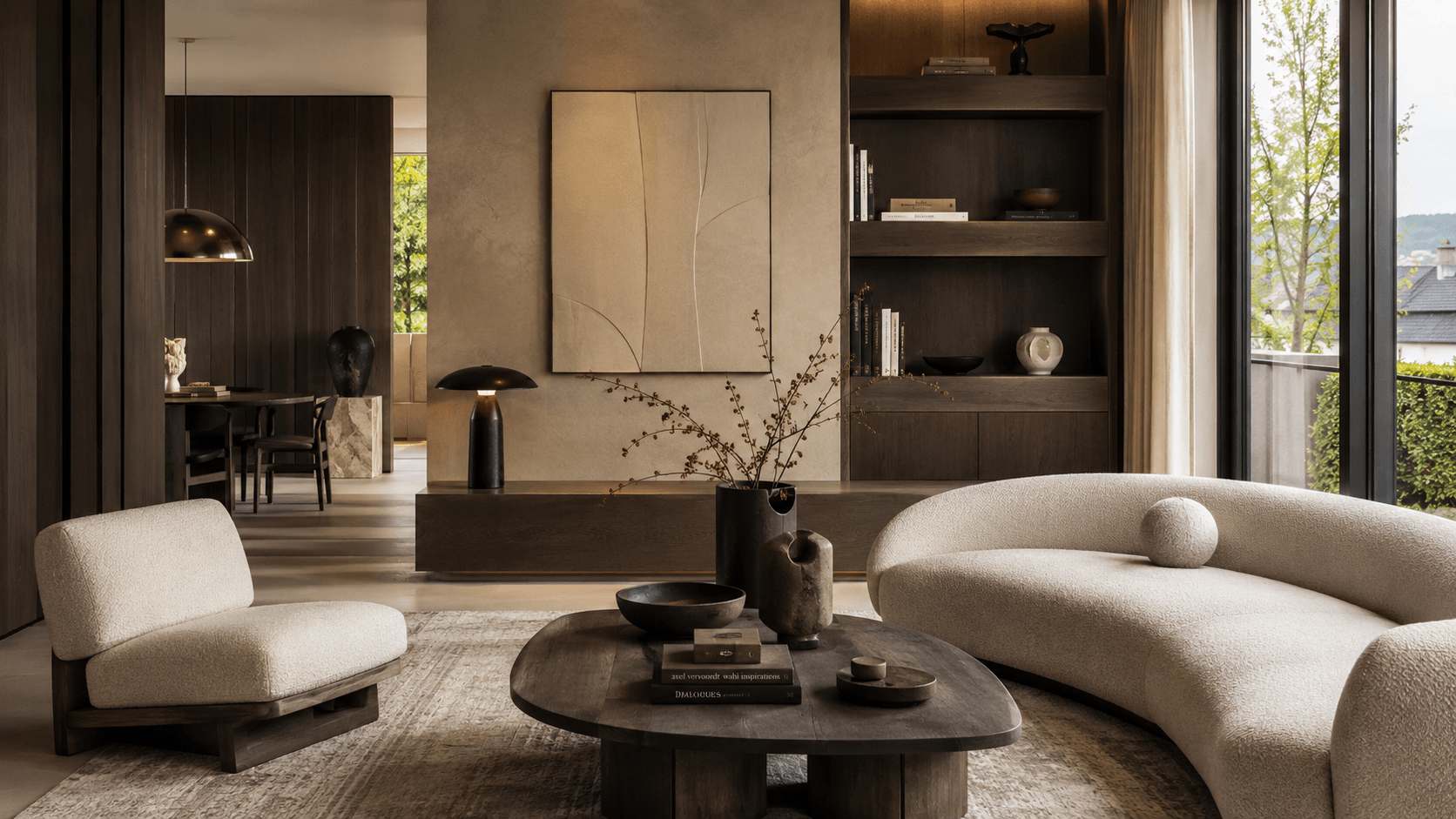
An expressive table can define the centre of an open-plan living and dining area. A freestanding shelving unit can divide different zones without interrupting the generosity of the architecture. A handcrafted armchair can give a quiet corner a distinctive presence. Bespoke built-in furniture can connect furniture design and interior architecture so closely that it appears to be a natural part of the building itself.
This relationship is particularly important in exclusive villas and apartments in Zurich. Spacious rooms, high-quality materials and expansive views require furniture that can match their architectural quality. Pieces that are too small, generic or purely decorative can quickly become lost. Too many dominant objects, on the other hand, compete with one another and create visual unrest. The art lies in finding the right balance.
Swiss Furniture Design: Precision Without Showmanship
The Swiss design tradition is closely associated with functional clarity, structural precision and a conscious approach to materials. This philosophy continues to shape design today. It can be seen in carefully developed details, comprehensible construction methods and furniture whose quality does not depend on superficial presentation.
A contemporary example of this connection between architecture, product design, scenography and material research is atelier oï. The Swiss studio was awarded the Swiss Grand Award for Design in 2026. Its work demonstrates how materials can create unexpected spatial effects through movement, folding, light and experimental craftsmanship.
For us, this represents one of the essential qualities of Swiss furniture design: its appearance is often restrained, yet every detail is carefully considered. Instead of relying on short-term effects, the emphasis is placed on construction, material honesty and longevity. These qualities are particularly well suited to timeless interiors that are not intended to be completely reinvented every few years.
Zurich as a Centre for Design, Art and Collections
Zurich offers an exceptionally concentrated environment of museums, galleries, design studios, showrooms, universities and specialised craft businesses. This creates a direct exchange between historic design, contemporary perspectives and new forms of production.
Since January 2026, the Museum für Gestaltung Zürich at the Toni-Areal has presented the permanent Swiss Design Collection. Around 2,500 objects from the fields of product design, textiles, graphic design and decorative arts demonstrate that every significant design object is the result of an individual development process. The exhibition offers insights not only into well-known designs, but also into the cultural and craftsmanship history behind the objects.
The Zurich Design Weeks also strengthen Zurich’s position as a design destination. From 17 to 27 September 2026, studios, institutions, showrooms and brands will open their doors. A central element will be the international interior exhibition “neue räume 26”, taking place from 24 to 27 September at Hall 550 in Zurich-Oerlikon. In November, BLICKFANG Zürich will follow at the Kongresshaus, offering visitors the opportunity to experience independent design labels and meet their designers directly.
Events of this kind are especially valuable for interior architecture. Furniture cannot be assessed solely through photographs. Proportion, weight, texture, seating comfort and the true character of a material can only be fully understood through direct experience.
How We Select Exceptional Furniture for an Interior
A curated interior does not begin with a shopping list. It begins with a spatial concept. At Anlela Design, we first define the atmosphere that a home should convey. Should it feel calm and monolithic, warm and sensual or deliberately contrasting? What role should art, nature and personal memories play? Which areas require a strong presence, and which should remain visually restrained?
Based on this foundation, we select individual pieces of furniture that fulfil a clear purpose within the overall concept. Often, one strong focal piece per room is enough. This might be a dining table with a sculptural base, a rare vintage item or a specially designed chest of drawers. The remaining elements support this piece without imitating it.
We pay particular attention to the relationship between materials. Solid wood creates a different effect beside natural stone than it does beside high-gloss lacquer. Brushed metal can create cool precision, while patinated bronze or hand-shaped ceramics add warmth and depth. Textiles form a bridge between hard surfaces while also influencing acoustics, light and physical comfort.
Individual Pieces Instead of a Showroom Effect
A room loses its personality when all of its furniture comes from the same collection or a single brand. What appears harmonious in a showroom can quickly feel impersonal in a private home. A convincing interior requires tension: old and new, precise and handcrafted, quiet and expressive elements should be allowed to coexist.
However, this tension must be carefully controlled. Collectible Design does not mean assembling as many striking objects as possible. A home is neither a trade fair stand nor a museum. The furniture must remain functional and support everyday life. An exceptional object is successfully integrated when it enriches the room without dominating it.
Personal pieces also play an important role. An inherited item of furniture, a ceramic object discovered while travelling or a work of art with emotional significance can become the starting point for an entire spatial concept. New materials, a different placement or a combination with contemporary designs can give it an entirely new context.
Bespoke Furniture for Villas and Apartments in Zurich
Not every space can be resolved convincingly with existing products. Unusual floor plans, large-format windows, sloping ceilings or flowing transitions between indoor and outdoor areas often require individually developed solutions. Bespoke furniture makes it possible to adapt proportions, functions and materials precisely to the architecture.
A custom-designed built-in unit can conceal technology, provide storage and structure a wall architecturally at the same time. A dining table can be designed according to the axis of the room, the required number of seats and the surrounding view. Sideboards, beds or seating landscapes can be created so that they integrate naturally into the overall design.
Collaboration with specialised joineries, metalworkers, stone fabricators and other craftspeople is essential. The quality of a design is ultimately revealed through its execution: in clean joints, balanced material thicknesses, precise transitions and surfaces that remain convincing even when viewed at close range.
How Can You Recognise a Piece of Furniture with Lasting Value?
A high-quality piece of furniture should not only impress at first glance. Its quality is revealed through its construction, choice of materials and level of craftsmanship. For limited-edition pieces, information about the designer, manufacturer, edition and provenance is also important. Documentation and verifiable provenance can play a central role, particularly with historic or collectible objects.
However, personal and spatial relevance remain decisive. Not every famous design piece is suitable for every home. An object may be significant in terms of design history and still feel wrong within a particular room. Conversely, an unknown but exceptionally well-crafted one-off piece may create precisely the calmness and identity that an interior requires.
We therefore recommend selecting furniture not solely according to names, market value or current trends. The most important question is whether the piece will still be appreciated and used in ten or twenty years. Does it suit the architecture, the owners’ way of life and their personality? Only then can genuine and lasting value be created.
Timeless Interior Architecture Through Conscious Selection
For us, Collectible Design is not a form of decorative luxury, but a conscious approach to design. Fewer but better pieces of furniture create calmness and give each object the space it needs. High-quality materials age gracefully, craftsmanship remains visible and distinctive designs give a home an unmistakable identity.
In the interior architecture of Anlela Design, we combine architecture, furniture design, art and materials to create a coherent whole. For villas and apartments in Zurich, we develop interiors that do not resemble finished catalogue images, but can continue to evolve over many years. A home should be allowed to change, welcome new pieces and reveal personal traces. This is where its true elegance lies.
The best rooms do not reveal how much was invested in them. They show how consciously every element was selected.